


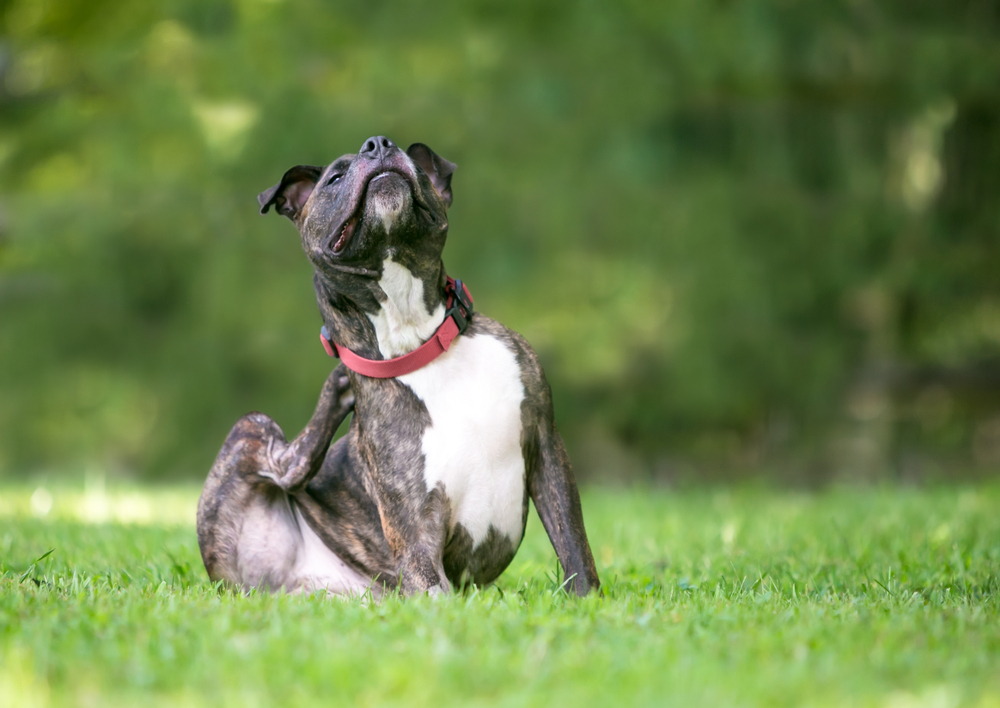
Summer walks are a favorite part of the day for many Evansville dogs, but June can also bring more itching, biting, and skin irritation. When the weather warms up and pets spend more time outside, fleas, ticks, and environmental irritants can become more active. At Highland Veterinary Clinic, we often hear from pet parents who notice their dog scratching more after walks, especially after time in grass, wooded areas, or shaded yards.
While an occasional scratch is normal, frequent scratching should not be ignored. It can be a sign of fleas, ticks, allergies, or skin irritation that needs veterinary attention.
Why Summer Walks Can Trigger More Scratching
Fleas and ticks thrive in warm weather, making June an important time to watch your dog’s skin and coat closely. Dogs can pick up fleas from other animals, yards, parks, and walking paths. Ticks are often found in tall grass, brush, and wooded areas, but they can also be present in neighborhood spaces around Evansville.
Scratching after a walk does not always mean your dog has fleas or ticks, but it is a reason to take a closer look. Irritants like pollen, weeds, grass, and insect bites can also cause discomfort. Some dogs are especially sensitive and may react quickly after outdoor activity.
Flea and Tick Signs to Watch For
After summer walks, we recommend checking your dog’s coat, skin, ears, belly, paws, and under the collar. Common signs that fleas, ticks, or irritation may be affecting your dog include:
- Frequent scratching, licking, chewing, or rubbing against furniture
- Small black specks in the coat, often called flea dirt
- Red, inflamed, scabbed, or irritated skin
- Visible ticks attached to the skin, especially around the ears, neck, toes, or belly
- Hair loss, hot spots, or a sudden change in your dog’s comfort level
If your dog is scratching more than usual, avoid assuming it will clear up on its own. Fleas can multiply quickly, and ticks can carry disease. Early treatment helps protect your dog and can prevent a small issue from becoming a bigger skin problem.
What To Do After Outdoor Time
A quick post-walk check can make a big difference. Brush through your dog’s coat, feel for bumps, and inspect areas where ticks like to hide. Wiping your dog’s paws and belly can also help remove pollen and outdoor irritants before they cause more itching.
Preventive care is one of the best ways to protect your pet. Our team can help you choose a flea and tick prevention plan based on your dog’s age, lifestyle, health history, and exposure risk. Not every product is right for every pet, so we recommend asking our veterinary team before starting or changing prevention.
When To Call Our Veterinary Team
If your dog is scratching constantly, has red or broken skin, seems uncomfortable, or you find fleas or ticks, it is time to schedule a visit. We can examine your dog’s skin, check for parasites, look for signs of infection, and recommend safe treatment.
For flea and tick care in Evansville, IN, contact Highland Veterinary Clinic at 6805 Darmstadt Rd by calling (812) 710-4300.
